Why Your Parking Lot Lights Go Dark, and What's Actually Wrong
A dead pole light usually isn't the fixture. Here's how to tell what's actually failing before you call anyone.
September 2, 2026 · 3 min read
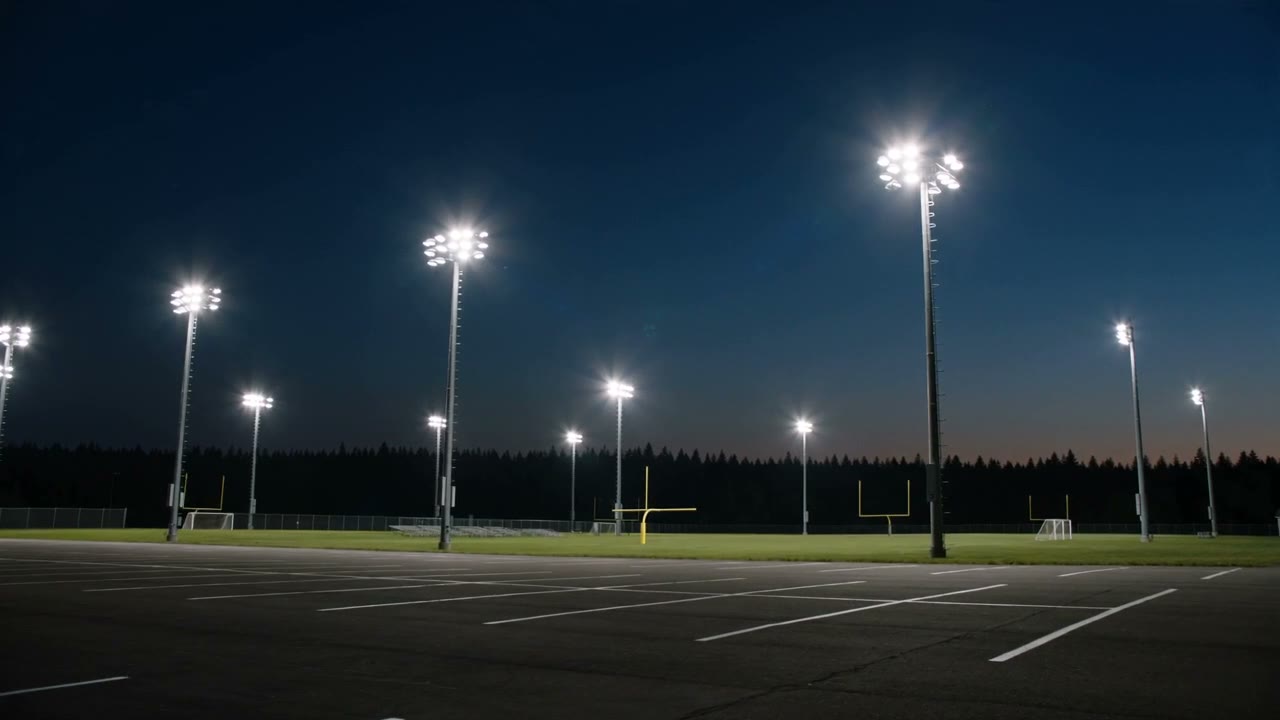
If you manage a parking lot in Longview, you already know the pattern. One corner goes dark first. Nobody complains until someone almost hits a curb, or a tenant asks why the back row feels unsafe after dark. By the time it's obvious, the fix usually isn't as simple as a new bulb.
It's probably not the bulb
Most site lighting on commercial lots and ball fields runs on a photocell, the small sensor that turns the lights on at dusk and off at dawn. Photocells fail in two directions. A stuck-open cell leaves lights burning all day, which shows up as a power bill spike long before anyone notices a dark spot. A stuck-closed cell does the opposite: the lights never come on at all, even though the fixture itself is fine. Years of Texas sun wear down the sensor lens, and once it's identified correctly, it's usually a fast, cheap fix. A lot of service calls that sound like a dead fixture turn out to be one small part.
Ballasts and drivers wear out on their own clock
Older metal halide fixtures run on a ballast, and ballasts fail slowly before they fail completely. A common warning sign is a light that takes three or four minutes to reach full brightness after it kicks on, or one that cycles off and restrikes on its own through the night. That's the ballast telling you it's near the end. Newer LED fixtures use a driver instead, and drivers tend to fail differently, often all at once, sometimes with a faint hum or a flicker in the seconds before they go dark for good. Knowing which kind of fixture you have changes what the fix looks like, and it's worth checking before you assume every light on the lot needs the same repair.
The pole and the base take more damage than the fixture does
A light pole takes a beating that has nothing to do with the bulb inside it. Steel bases corrode at grade level, especially where a lot drains poorly. Conduit runs under the asphalt get nicked during repaving or landscaping work, and a nicked run can let water track up into the fixture housing and short it out months later, in a spot nowhere near the actual damage. If a light has been flickering for a while and then goes dark for good right after a hard rain, the wiring under the pavement is worth a look before anyone climbs a ladder.
One contactor can take out a whole row
This is the one property managers find most confusing: an entire bank of lights goes dark at once, and it looks like six or eight fixtures all failed the same night. Usually they didn't. Most lots run several fixtures off a single contactor, a switch that turns a whole circuit on and off together, often on its own timer or photocell. When the contactor fails, everything downstream of it goes dark at the same time, and it can look far scarier than it actually is to fix. Mentioning this when you call points a technician straight at the panel instead of straight at a ladder.
A dark lot isn't only a lighting problem
For a church, a school, or a retail property, a dark corner of the lot is a liability question as much as an electrical one. Insurers and attorneys both look at whether a property owner knew about a lighting outage and how long it went unaddressed, whether the incident involved a fall, a break-in, or a car accident in a poorly lit lane. Fixing a dead pole light quickly isn't only about the property. It's part of showing you looked after the people who use it.
What to have ready before you call
- Which fixtures are out, and whether it's one pole, a whole row, or the entire lot
- Whether it happened suddenly or got worse over a few weeks
- Whether any breaker has tripped, or the power to the lot went out entirely
- How the lot gets used at night, since a church lot and a late-night retail lot get prioritized differently
Cobb Electric has been doing this kind of work in Longview since 1946, and site lighting and sports field lighting are two of the project types they name first when they talk about what they do. If you're dealing with a dark corner of a lot in Longview, Tyler, or Lindale, call 903-757-4953 and describe what you're seeing. A clear description over the phone gets a technician to the right part of the problem faster.
Cobb Electric — 903-757-4953
Call 903-757-4953More articles
The Real Signs an Older Longview House Needs a Service Upgrade
Breakers that trip for no reason and a panel with no room left are usually saying the same thing.
How to Actually Check That an Electrician Is Licensed and Insured in Texas
Two words get printed on every truck in Texas. Here's what they should actually mean before you hire anyone.